
Knowledge Center
Operational research, technical visuals, and AI-guided discovery.
The knowledge center shares research and insight related to autonomous aerial intelligence systems, infrastructure monitoring, swarm coordination, and applied AI surveillance technologies.
Topic
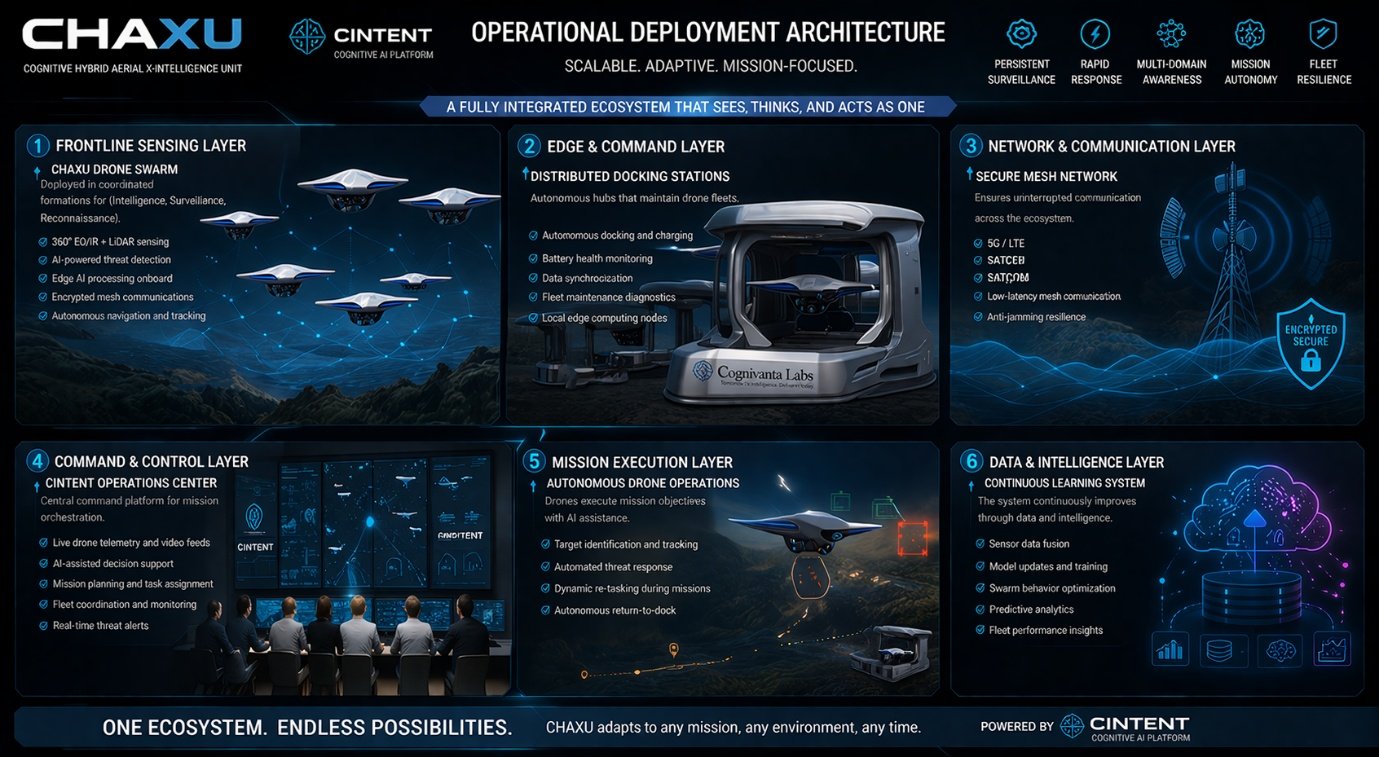
autonomous monitoring architectures
Research and system design approaches for persistent aerial monitoring.
Persistent monitoring combines scheduled patrols, event-triggered dispatch, docking recovery, and replayable operational memory.
A CHAXU deployment should preserve mission intent, telemetry state, governance context, and operator action as one reconstructable chain.
Open topic
Topic
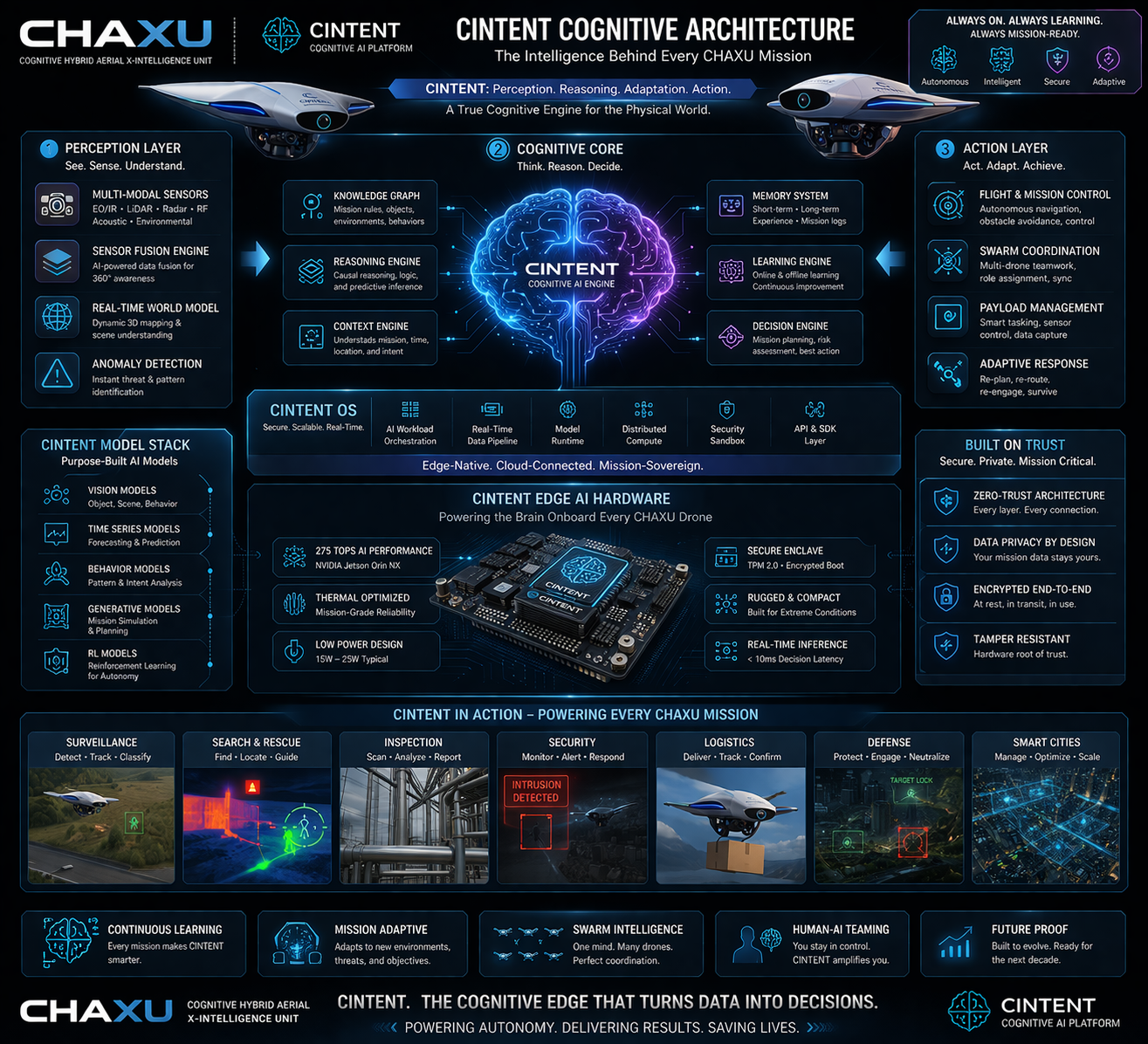
swarm coordination systems
Distributed coordination patterns for collaborative drone operations.
Swarm coordination assigns coverage, balances battery constraints, and changes formation when alerts or terrain conditions shift.
The control layer must expose individual drone state while keeping the fleet-level objective legible to operators.
Open topic
Topic
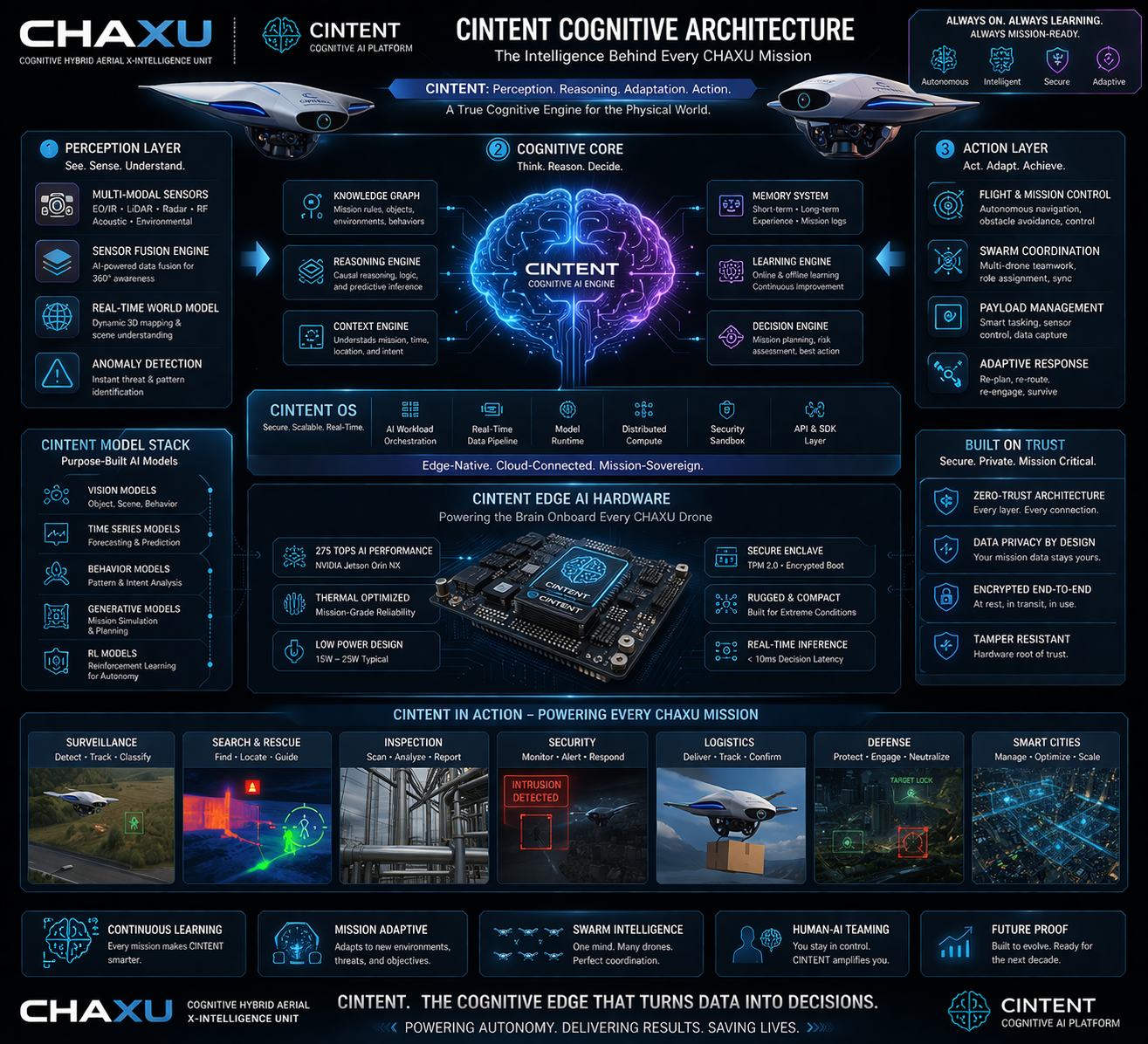
AI-enabled surveillance technologies
Applied sensing, anomaly detection, and autonomous surveillance logic.
AI-enabled surveillance depends on time-correlated sensor feeds, anomaly scoring, operator context, and policy-aware alerting.
CINTENT should explain why a signal matters, which assets are affected, and what response path is recommended.
Open topic

Topic
intelligent infrastructure monitoring
Operational models for monitoring complex infrastructure environments.
Infrastructure monitoring requires asset maps, inspection routes, maintenance state, and environmental readings to be linked.
The mission record should preserve both normal patrol evidence and exception events so teams can compare change over time.
Open topic
Topic
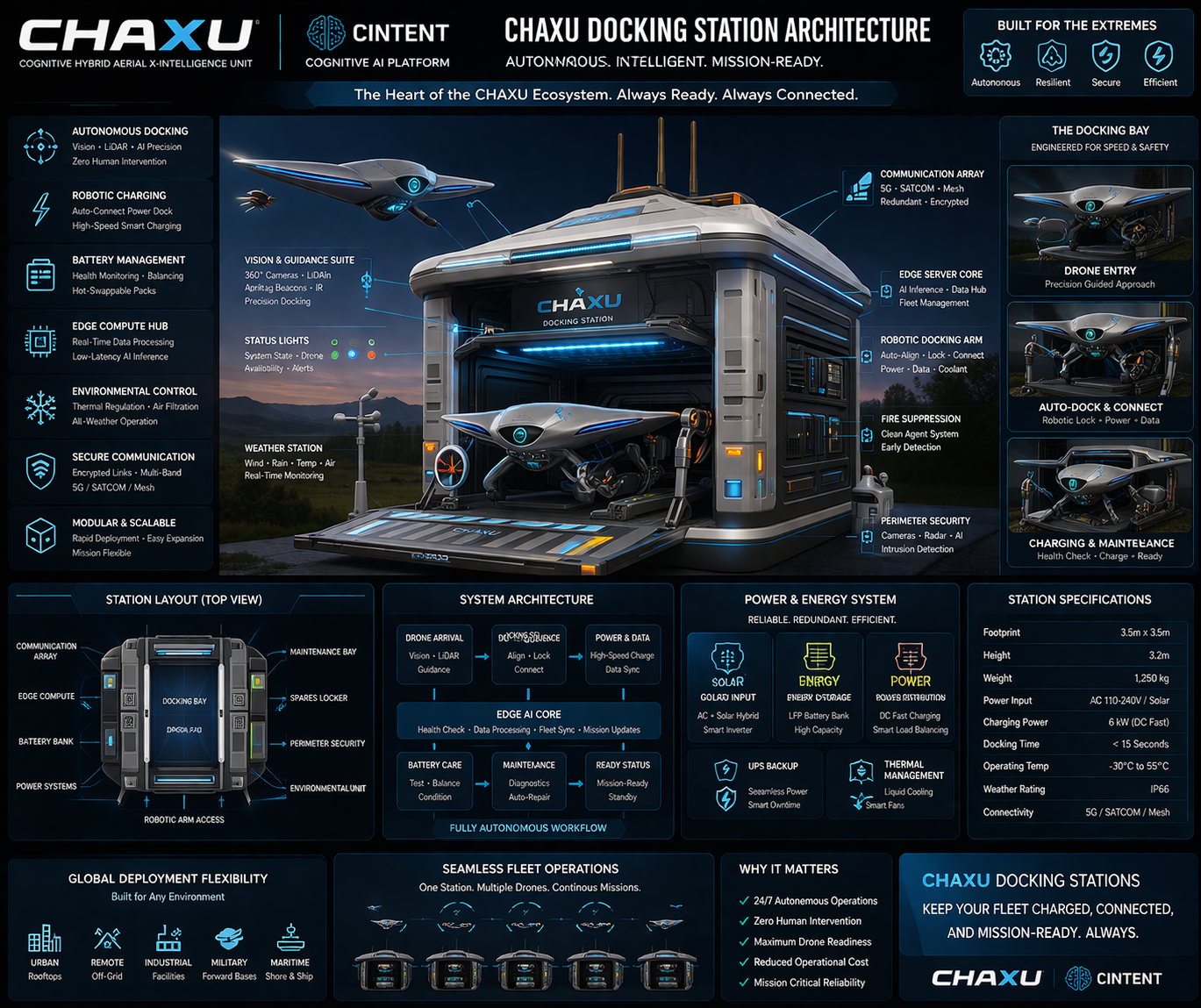
docking and energy continuity
How autonomous docks support persistent missions, recharge cycles, and recovery.
Docking infrastructure is the difference between a single flight and a persistent operational network.
Charging readiness, bay occupancy, maintenance state, and relaunch timing should be visible in command and replay views.
Open topic
Topic
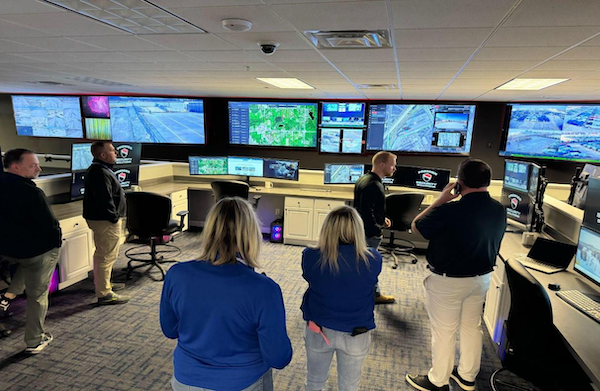
mission replay and audit
Reconstructing telemetry, cognition, governance, and operator actions after a mission.
Replay is the operational black box for CHAXU missions.
A useful replay joins mission events, telemetry checkpoints, cognition decisions, governance alerts, and operator overrides.
Open topic
Topic
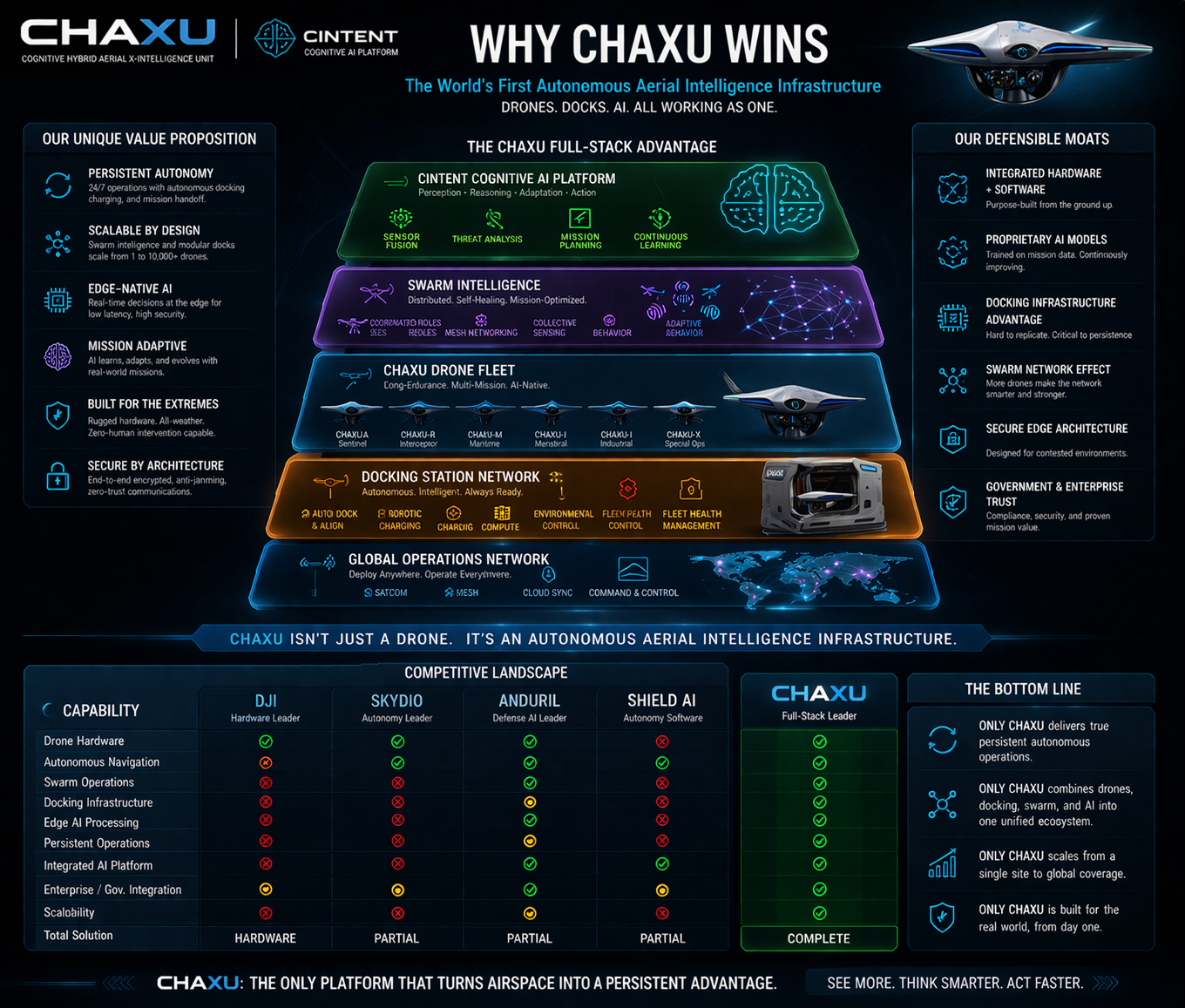
developer API operations
API keys, usage metering, gateway behavior, and developer integration patterns.
Developer APIs should expose mission launch, telemetry history, replay timelines, and operational status through scoped keys.
Usage metering and billing visibility are part of operational trust, not just commercial administration.
Open topic
Topic
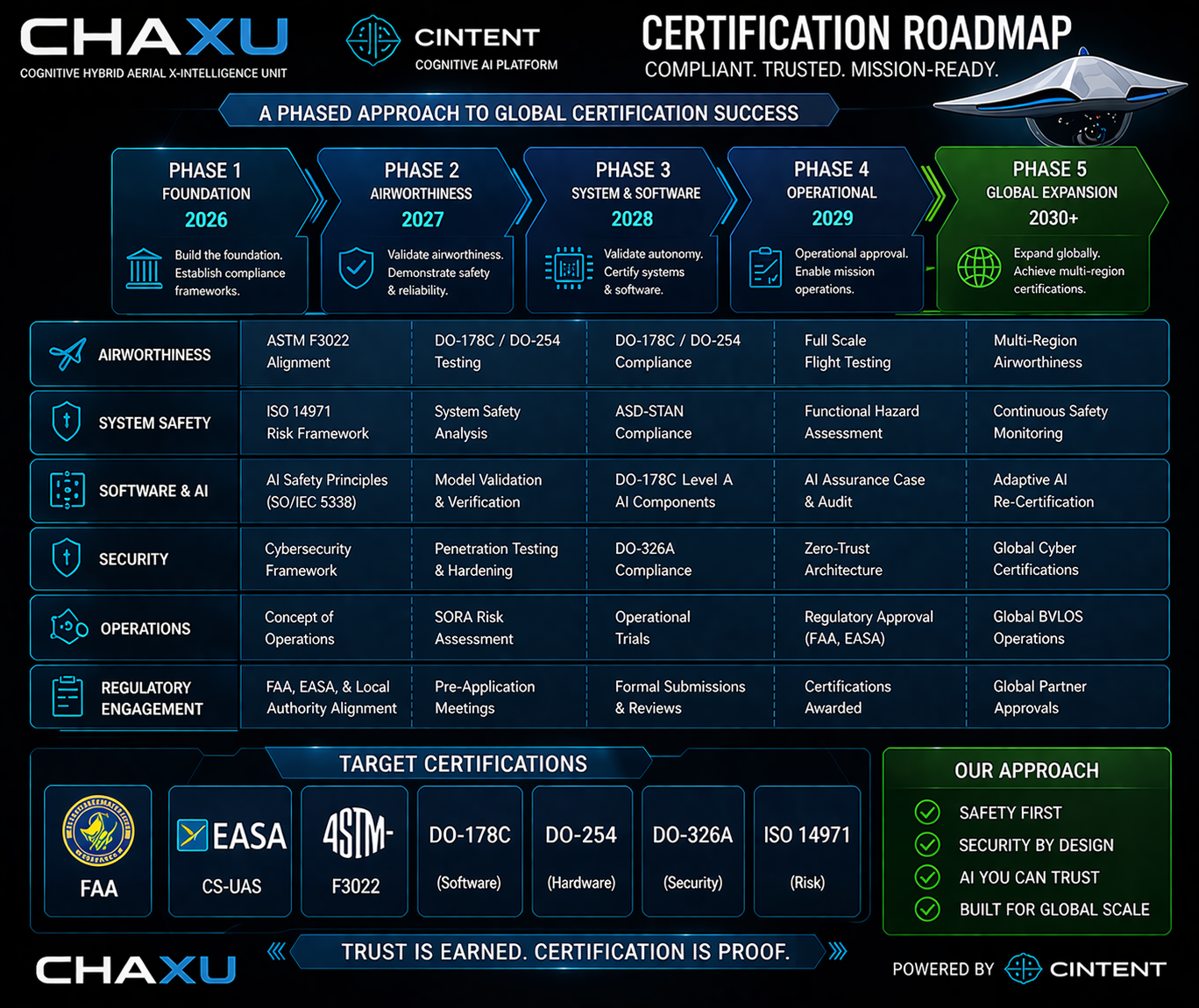
governance and compliance
Regulatory reasoning, compliance scoring, geofencing, and operational constraints.
Governance-aware autonomy needs policy checks before, during, and after a mission.
Geofence, altitude, authorization, NPNT, operator certification, and audit events should be linked to mission history.
Open topic
Topic
multimodal sensor fusion
Video, audio, thermal, lidar, radar, and telemetry correlation for mission intelligence.
Sensor fusion works when each feed shares mission identifiers, timestamps, asset references, and replay markers.
Video, audio, thermal, lidar, radar, and telemetry metadata should be correlated before cognition makes recommendations.
Open topic

Topic
incident response playbooks
Operational response patterns for breaches, anomalies, infrastructure faults, and disaster events.
Incident response starts with alert confidence, affected zone, available assets, and response constraints.
CHAXU should recommend response posture while preserving operator authority and auditability.
Open topic
Knowledge structure
Every topic now opens into article content, image zoom, and operational use notes.
The hub is organized around practical CHAXU operations: swarm coordination, autonomous monitoring, AI surveillance, infrastructure intelligence, docking continuity, replay audit, developer APIs, governance, multimodal fusion, and incident playbooks.
Swarm coordination system: coverage, formation, battery balancing, and multi-drone replay.
Autonomous monitoring architectures: persistent patrol, dock recovery, and supervised autonomy.
AI-enabled surveillance technologies: sensing, anomaly detection, evidence, and response posture.
Intelligent infrastructure monitoring: asset maps, maintenance context, and historical comparison.
Docking and energy continuity: launch, landing, charging, synchronization, and readiness.
Multimodal sensor fusion: video, audio, thermal, lidar, radar, telemetry, and cognition evidence.
API documentation
Developer API documents are available after login, key generation, and active credits.
Public knowledge stays open here. Endpoint details, request bodies, quotas, SDK examples, and production access notes are gated under the Developer Platform so usage and billing stay accountable.
Auth, PIN verification, and API keys
Locked until developer login with available credits.
Mission, drone, telemetry, replay, and cognition APIs
Locked until developer login with available credits.
Billing, credits, quotas, and metered usage
Locked until developer login with available credits.
AskCOGNI
The assistant now floats across the entire website, so knowledge center readers can ask questions while staying inside any article, technology brief, or product context page.