Technology Overview
CINTENT is the intelligence layer behind CHAXU autonomy.
CINTENT is a cognitive artificial intelligence platform designed to enable autonomous systems. Through it, CHAXU drones can interpret sensor data, adjust monitoring patterns, and coordinate with other units during live operations.
Perception
Sensor fusion
Reasoning
Mission policy
Action
Autonomous response
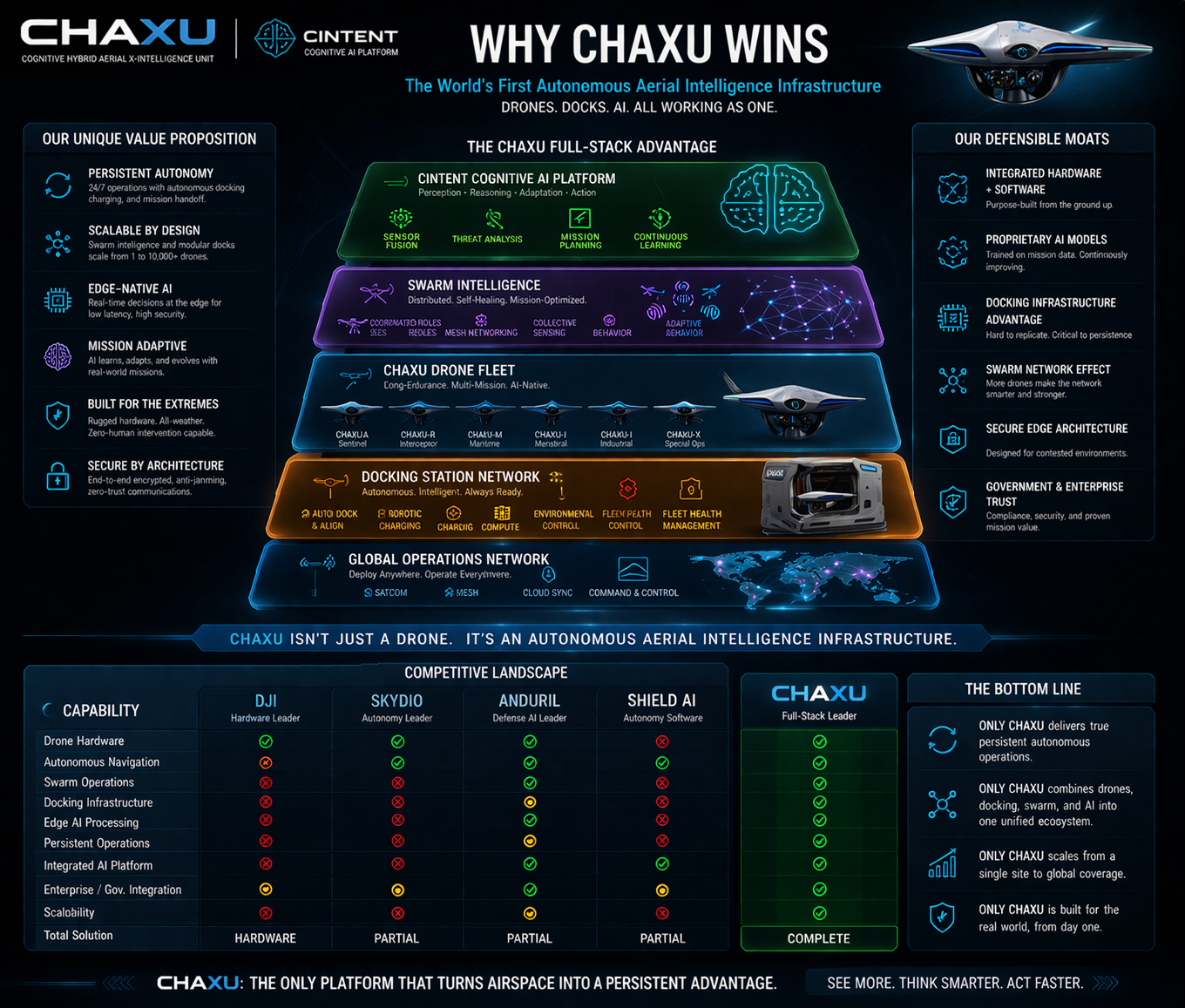
CINTENT stack
Full-stack autonomy combines sensing, swarm intelligence, docks, global operations, and developer access into one operational platform.
Open stack context
mission planning intelligence
Mission intent, waypoint logic, risk scoring, dock availability, and replay requirements are evaluated before launch.
Read technical context
sensor fusion and data interpretation
Video, thermal, telemetry, radar, audio, and environmental signals are correlated into one mission timeline.
Read technical context
anomaly detection
CINTENT separates routine observations from unusual movement, heat, signal, compliance, and behavior patterns.
Read technical context
multi-agent coordination
Fleet behavior is coordinated across aircraft, docks, mission objectives, and governance boundaries.
Read technical context
adaptive operational learning
Replay, audit, and cognition records feed future route planning, alert triage, and governance tuning.
Read technical context
Intelligence
Operational intelligence layers
CHAXU uses CINTENT to move from raw drone signals into mission decisions, governance-aware recommendations, and replayable evidence. Each layer below opens into a dedicated knowledge path with deeper technical context.
Technical chain
Aircraft sensing, onboard compute, telemetry, cognition, governance, and replay stay connected through the mission data chain.
Open sensor fusion context
mission planning intelligence
Waypoint graph validation
Battery and dock-aware routing
Mission replay identifiers
Operator approval state
sensor fusion and data interpretation
Synchronized timestamps
Evidence-linked alerts
Sensor confidence scoring
Replay-ready multimodal frames
anomaly detection
Signal drift detection
Thermal and route anomalies
Confidence thresholds
Operator review queues
multi-agent coordination
Coverage distribution
Formation changes
Return-to-dock balancing
Fleet-level operator visibility
adaptive operational learning
Historical route comparison
Operational memory
Policy-aware adaptation
Post-mission review loops
Docking system
Launch, landing, charging, synchronization, and persistent fleet readiness.
Dock assignment, bay occupancy, and charging status remain visible in command and replay.
Return-to-dock can be triggered by battery pressure, governance hold, weather, or mission completion.
Energy continuity decides whether CHAXU can sustain persistent monitoring instead of single-flight coverage.
Operations dashboard
Telemetry, alert triage, anomaly scoring, and mission assurance views.
Runtime channels expose telemetry, cognition, governance, replay, and persistence state.
Operators can switch scenarios, mission types, and swarm modes without losing context.
Command views must remain dense and scannable during live operations.
Drone systems
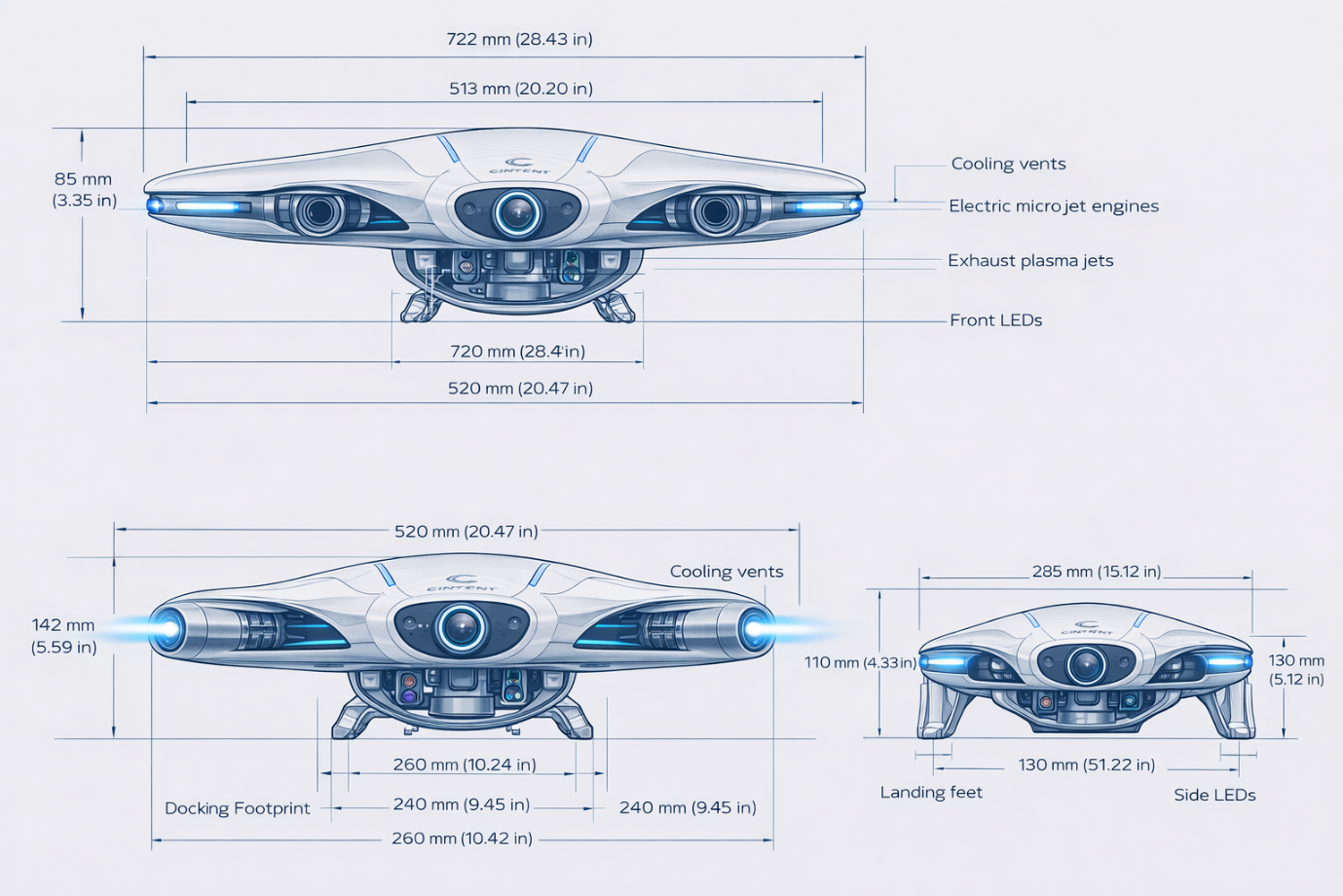
Approved aircraft systems visualization across sensing, communications, and onboard intelligence.
Aircraft, payload, communications, and cognition systems are treated as one operational asset.
Approved configurations can be mapped to mission class, sensor requirements, and compliance boundaries.
Hardware remains vendor-flexible while the CHAXU runtime provides the operational layer.
Runtime command
See telemetry, cognition, governance, replay, docks, and swarm state in one console.
API platform
Execute live gateway calls and unlock API documents with credits.
Multimodal intelligence
Open sensor fusion, replay, and cognition knowledge content.